
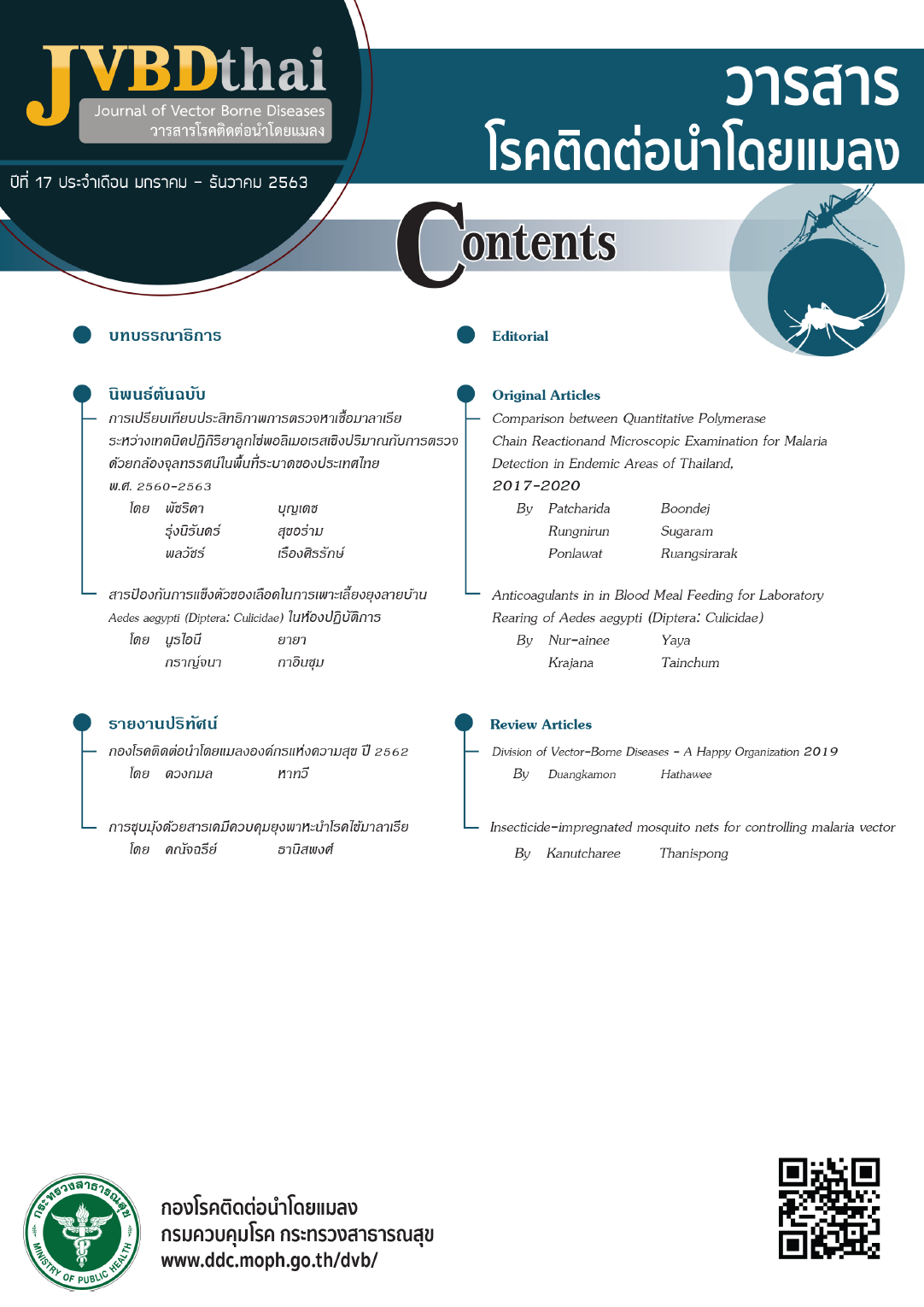
Comparison between Quantitative Polymerase Chain Reaction and Microscopic Examination for Malaria Detection in Endemic Areas of Thailand, 2017-2020
Article Sidebar
Main Article Content
Abstract
Malaria is an infectious disease caused by Plasmodium spp. Although treatable, delayed diagnosis and treatment can result in fatal outcomes. This study aimed to compare the effectiveness between quantitative Polymerase Chain Reaction (qPCR) and microscopic examination for malaria detection. A total of 198 malaria patient samples were collected during 2017-2020 under the Integrated Drug Efficacy Surveillance (iDES) program from 14 malaria-endemic provinces in Thailand , including Mae Hong Son, Chiang Rai, Chiang Mai, Tak, Sisaket, Ubon Ratchathani, Chonburi, Ranong, Prachuap Khiri Khan, Chumphon, Surat Thani, Nakhon Si Thammarat, Phang Nga, and Yala. The results showed 94.95% (188 samples) concordance between both methods, while 5.05% (10 samples) showed discordant results, primarily in cases of mixed infections and P. knowlesi infection. The qPCR method demonstrated 100% accuracy, sensitivity, and specificity compared to microscopic examination. Although qPCR has a higher cost than microscopic examination, its precise results provide valuable epidemiological data for better malaria control and prevention strategies.
Downloads
Article Details

This work is licensed under a Creative Commons Attribution-NonCommercial-NoDerivatives 4.0 International License.
The opinions and content expressed in the articles are solely those of the individual authors and do not necessarily reflect the views of the journal or the authors’ affiliated institutions. Authors are fully responsible for the accuracy and correctness of their work.
Any reuse, reproduction, or redistribution of the articles, content, data, or images in other forms requires prior written permission from the Division of Vector Borne Diseases.
