ผลของสื่อจำลองการประกอบคอมพิวเตอร์แบบปฏิสัมพันธ์ต่อผลสัมฤทธิ์ทางการเรียนและทักษะเชิงกระบวนการของนักศึกษาระดับอุดมศึกษาในกลุ่มสาขาคอมพิวเตอร์
DOI:
https://doi.org/10.57260/stc.2026.1425คำสำคัญ:
สื่อปฏิสัมพันธ์ , การเรียนรู้ด้วยการจำลอง , ทักษะการคิดและการปฏิบัติ , ผลสัมฤทธิ์ทางการเรียน , การศึกษาระดับอุดมศึกษาบทคัดย่อ
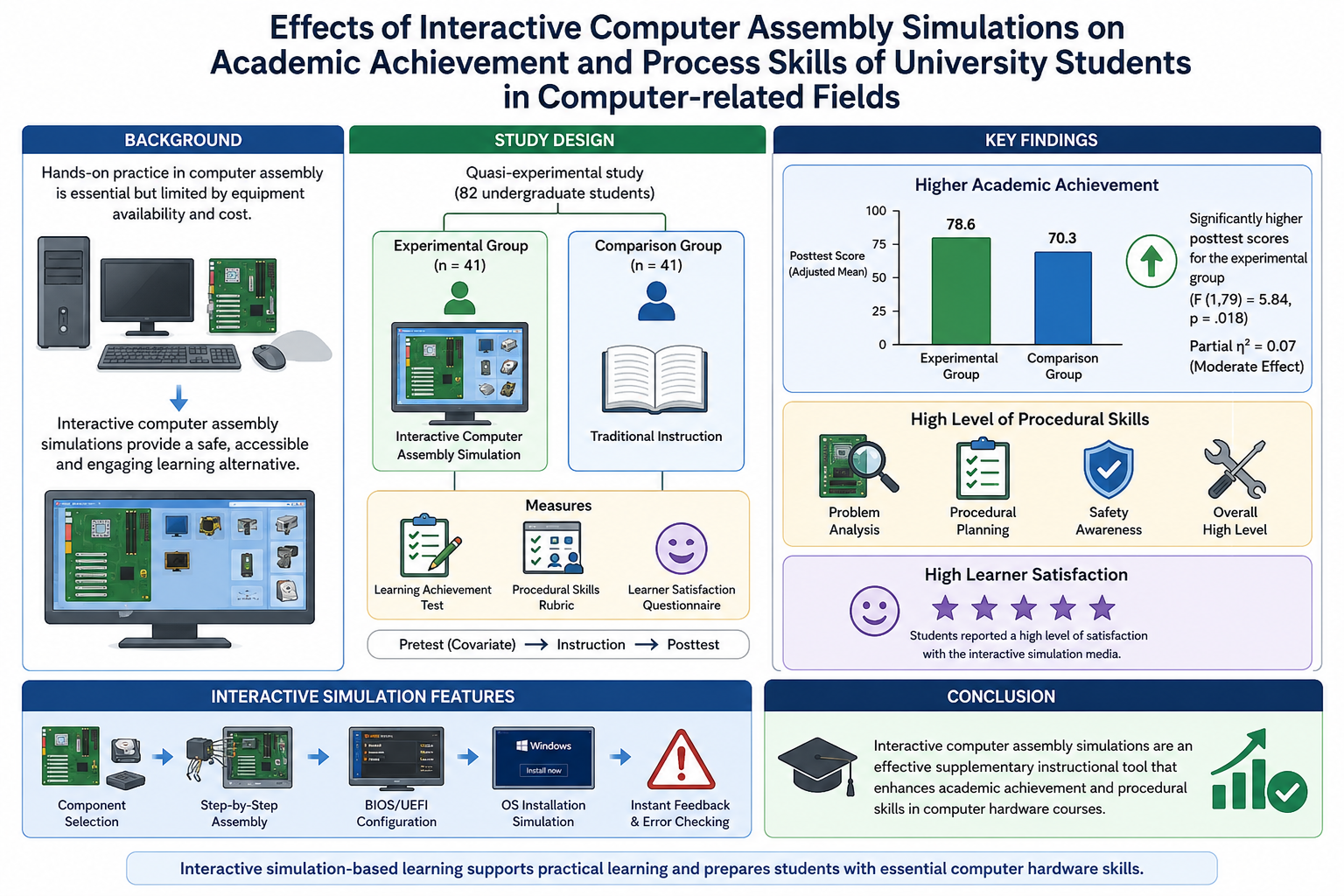
การวิจัยครั้งนี้มีวัตถุประสงค์เพื่อศึกษาผลของสื่อจำลองการประกอบคอมพิวเตอร์แบบปฏิสัมพันธ์ต่อผลสัมฤทธิ์ทางการเรียนและทักษะเชิงกระบวนการของนักศึกษาระดับอุดมศึกษาในกลุ่มสาขาคอมพิวเตอร์ โดยใช้รูปแบบการวิจัยกึ่งทดลอง กลุ่มตัวอย่างจำนวน 82 คน แบ่งเป็นกลุ่มทดลองและกลุ่มเปรียบเทียบ เครื่องมือวิจัยประกอบด้วยแบบทดสอบวัดผลสัมฤทธิ์ทางการเรียน แบบประเมินทักษะเชิงกระบวนการแบบรูบริก และแบบสอบถามความพึงพอใจ วิเคราะห์ข้อมูลด้วยการวิเคราะห์ความแปรปรวนร่วม (ANCOVA) โดยใช้คะแนนก่อนเรียนเป็นตัวแปรร่วม
ผลการวิจัยพบว่า กลุ่มทดลองมีคะแนนผลสัมฤทธิ์ทางการเรียนหลังเรียนสูงกว่ากลุ่มเปรียบเทียบอย่างมีนัยสำคัญทางสถิติ (F (1,79) = 5.84, p = .018) และมีขนาดอิทธิพลระดับปานกลาง (partial η² = 0.07) นอกจากนี้ ผู้เรียนมีทักษะเชิงกระบวนการโดยรวมอยู่ในระดับสูง โดยเฉพาะด้านการวิเคราะห์ปัญหา การวางแผนขั้นตอน และความปลอดภัยในการปฏิบัติ รวมทั้งมีความพึงพอใจต่อการใช้สื่อในระดับสูง ผลการวิจัยสะท้อนว่าสื่อจำลองแบบปฏิสัมพันธ์สามารถใช้เป็นเครื่องมือเสริมเพื่อสนับสนุนการเรียนรู้เชิงปฏิบัติและพัฒนาทักษะด้านฮาร์ดแวร์คอมพิวเตอร์ในระดับอุดมศึกษาได้อย่างเหมาะสม
Downloads
เอกสารอ้างอิง
Brookhart, S. M. (2023). How to create and use rubrics for formative assessment and grading. (2nd ed.). ASCD.
De Jong, T., Linn, M. C., & Zacharia, Z. C. (2013). Physical and virtual laboratories in science and engineering education. Science, 340(6130), 305–308. https://doi.org/10.1126/science.1230579
Jonsson, A., & Svingby, G. (2007). The use of scoring rubrics: Reliability, validity and educational consequences. Educational Research Review, 2(2), 130–144. https://doi.org/10.1016/j.edurev.2007.05.002
Klinhom, N., Sudsanguan, N., Sudseechang, P., & Jattukul, W. (2022). Development of knowledge management infographic videos about online learning problems. Journal of Science and Technology, 2(2), 12–24. https://ph02.tci-thaijo.org/index.php/JSCI/article/view/247102
Koocharoenspaisal, N., Jongpoo, S., & Chaykaew, I. (2023). Development of multimedia to enhance learning on using scientific equipment for 7th grade students. Journal of Industrial Education, 22(1), 12–24. https://ph01.tci-thaijo.org/index.php/JIE/article/view/250714
Meesuwan, W. (2018). Research in educational technology. Naresuan University Press. Naresuan University Institutional Repository. https://nuir.lib.nu.ac.th/dspace/bitstream/123456789/3964/1/WiwatMeesuwan.pdf
Pholsalee, P. (2018). Development of infographic media based on transfer of learning on the topic of saving for the future of primary 6 students. (Master’s thesis, Rajamangala University of Technology Thanyaburi). http://www.repository.rmutt.ac.th/dspace/bitstream/123456789/3441/1/RMUTT-160341.pdf
Radianti, J., Majchrzak, T. A., Fromm, J., & Wohlgenannt, I. (2020). A systematic review of immersive virtual reality applications for higher education: Design elements, lessons learned, and research agenda. Computers & Education, 147, 103778. https://doi.org/10.1016/j.compedu.2019.103778
Suwansil, P. (2023). The development of learning achievement through learning unit of processes change inside the earth of grade 12 students by learning from creating infographics. Journal of Legal Entity Management and Local Innovation, 9(1), 151–162. https://so04.tci-thaijo.org/index.php/jsa-journal/article/view/257990
Wongjinda, W., & Mekpayom, A. (2022). The development of infographics in the design of online lessons for the industrial teacher students. Interdisciplinary Academic and Research Journal, 2(5), 155–166. https://so03.tci-thaijo.org/index.php/IARJ/article/view/263178
ดาวน์โหลด
เผยแพร่แล้ว
รูปแบบการอ้างอิง
ฉบับ
ประเภทบทความ
สัญญาอนุญาต
ลิขสิทธิ์ (c) 2026 วารสารวิทยาศาสตร์และเทคโนโลยีสู่ชุมชน

อนุญาตภายใต้เงื่อนไข Creative Commons Attribution-NonCommercial-NoDerivatives 4.0 International License.
1. บทความ ข้อมูล เนื้อหา รูปภาพฯลฯ ที่ได้รับการตีพิมพ์ใน “วารสารวิทยาศาสตร์และเทคโนโลยีสู่ชุมชน” ถือเป็นลิขสิทธิ์ของวารสารวิทยาศาสตร์และเทคโนโลยีสู่ชุมชน มหาวิทยาลัยราชภัฏเชียงใหม่ หากบุคคลหรือหน่วยงานใดต้องการนำทั้งหมดหรือส่วนหนึ่งส่วนใดไปเผยแพร่ต่อหรือกระทำการใดๆ จะต้องได้รับอนุญาตเป็นลายลักษณ์อักษรจาก วารสารวิทยาศาสตร์และเทคโนโลยีสู่ชุมชน มหาวิทยาลัยราชภัฏเชียงใหม่
2. เนื้อหาบทความที่ปรากฏในวารสารเป็นความรับผิดชอบของผู้เขียนบทความโดยตรง ซึ่งกองบรรณาธิการวารสารไม่จำเป็นต้องเห็นด้วยหรือร่วมรับผิดชอบใดๆ