Development of Rice Seasoning (Furikake) from Reduced-Sodium Kung-Jom
DOI:
https://doi.org/10.57260/stc.2026.1710Keywords:
Rice seasoning, Kung-jom, Reduced-sodiumAbstract
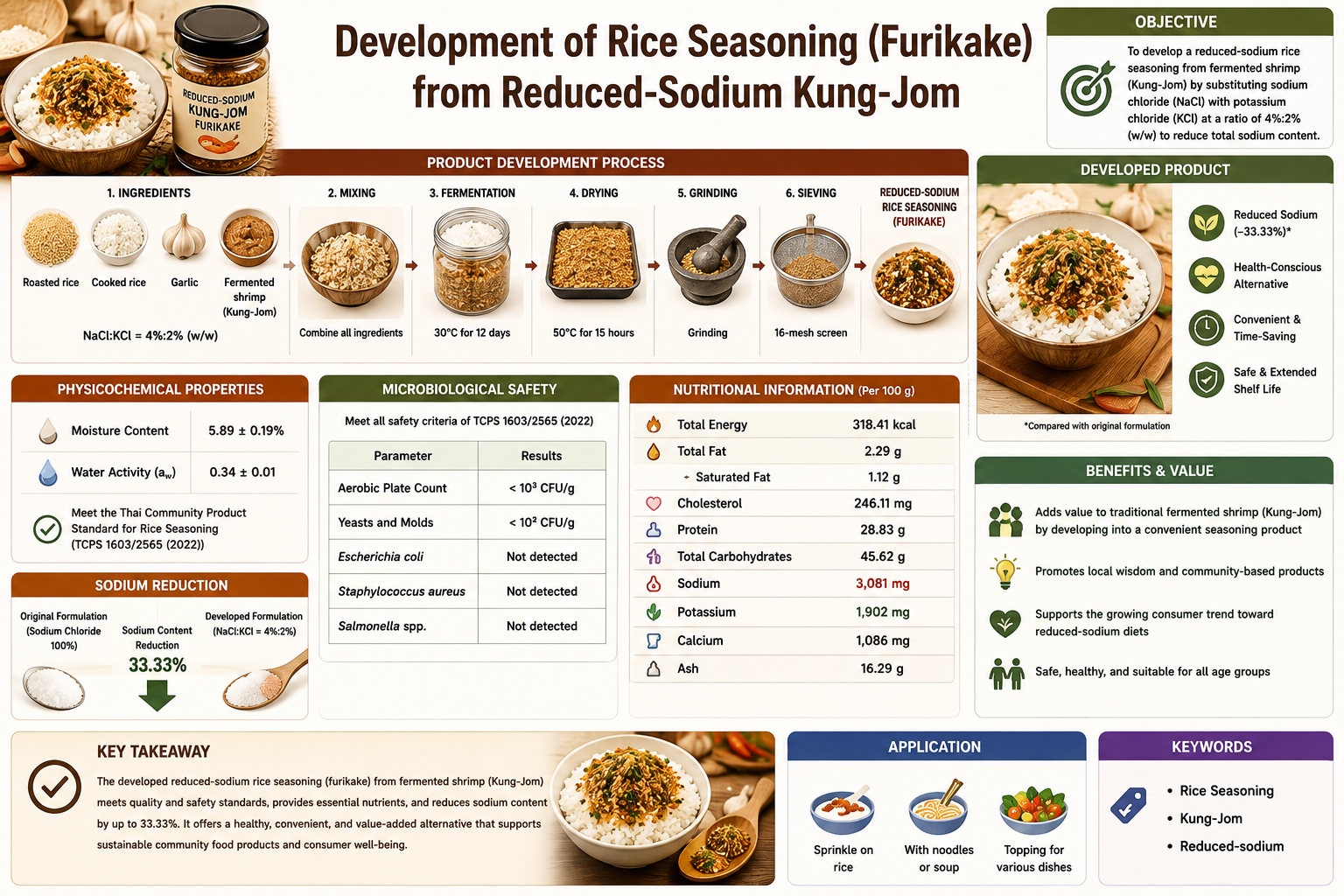
This research aimed to develop a reduced-sodium rice seasoning from fermented shrimp (Kung-Jom) by substituting sodium chloride (NaCl) with potassium chloride (KCl) at a ratio of 4%:2% (w/w) to reduce the total sodium content in the final product. The ingredients, comprising roasted rice, cooked rice and garlic, were combined and fermented at 30°C for 12 days. The fermented mixture was subsequently processed into a rice seasoning by drying at 50°C for 15 hours, followed by grinding and sieving through a 16-mesh screen. The developed reduced-sodium rice seasoning exhibited a moisture content of 5.89±0.19% and a water activity (aw) of 0.34±0.01 which the Thai Community Product Standard for rice seasoning (TCPS 1603/2565 (2022)). Furthermore, microbiological analysis confirmed that the product met all safety criteria established by the standard. Nutritional analysis per 100 g revealed that the product provided a total energy of 318.41 kcal, containing 2.29 g of total fat, 1.12 g of saturated fat, 246.11 mg of cholesterol, 28.83 mg of protein, 45.62 g of total carbohydrates, 3,081 mg of sodium, 1,902 mg of potassium, 1,086 mg of calcium and 16.29 g of ash. The developed reduced-sodium rice seasoning from fermented shrimp can reduce sodium content by up to 33.33% compared to the original formulation. This research presents the development of a novel product derived from traditional fermented foods, thereby adding value to indigenous fermented foods as community-based products. The application of local wisdom was promoted to generate a new product offering convenience, safety, reduced preparation time, and an extended shelf life. In addition, the product serves as a health-conscious alternative, supporting the growing consumer trend toward reduced-sodium diets.
Downloads
References
กมลวรรณ โรจน์สุนทรกิตติ, ธีรพร กงบังเกิด และ นิติพงศ์ จิตรีโภชน์. (2562). ผลของการทดแทนโซเดียมคลอไรด์ในผลิตภัณฑ์กะปิระหว่างกระบวนการหมักต่อสมบัติการต้านอนุมูลอิสระ. รายงานวิจัยฉบับสมบูรณ์. คณะเกษตรศาสตร์ ทรัพยากรธรรมชาติและสิ่งแวดล้อม มหาวิทยาลัยนเรศวร. https://nuir.lib.nu.ac.th/dspace/bitstream/123456789/4009/1/KamonwanRojsuntornkitti.pdf
กุลพร พุทธมี และ วริศชนม์ นิลนนท์. (2563). ผลของการทดแทนเกลือโซเดียมคลอไรด์ด้วยเกลือโพแทสเซียมคลอไรด์ต่อคุณภาพของข้าวเกรียบหอยนางรม. วารสารวิจัยและพัฒนาวลัยอลงกรณ์ในพระบรมราชูปถัมภ์, 15(2), 45-57.
https://so06.tcithaijo.org/index.php/vrurdistjournal/article/view/242161/165506
ขิมทอง โมริดา และ มนัญญา คำวชิระพิทักษ์. (2566). การพัฒนาผลิตภัณฑ์ผงโรยข้าว “ฟุริคาเคะ” รสหม่าล่าเสริมปลาแห้ง. วารสารวิจัยและพัฒนา วไลยอลงกรณ์ ในพระบรมราชูปถัมภ์, 18(1), 101-113. https://so06.tci-thaijo.org/index.php/vrurdistjournal/article/view/257702
ฉัตรชัย สังข์ผุด, สุริยะ จันทร์แก้ว, จีราภรณ์ สังข์ผุด, อนุสรณ์ บรรลือพืช, นุชวรา องศารา และ โชคชัย หมั่นถนอม. (2567).การพัฒนานวัตกรรมผลิตภัณฑ์เคยปลาฉลาดโซเดียมต่ำของชุมชนป่าพรุควนเคร็ง อำเภอชะอวด จังหวัดนครศรีธรรมราช. วารสารวิทยาศาสตร์และนวัตกรรมท้องถิ่น, 1(1), 9-20. https://li05.tci-thaijo.org/index.php/JSAI/article/view/257
ดวงรัตน์ พรเทวบัญชา. (2554). การพัฒนาผลิตภัณฑ์ผงโรยข้าว (ฟูริกาเกะ) จากผักสลัด. (วิทยานิพนธ์วิทยาศาสตรมหาบัณฑิต บัณฑิตวิทยาลัย มหาวิทยาลัยศิลปากร).
https://sure.su.ac.th/xmlui/handle/123456789/10280
ธันยพร บุญศิริ, จิราภรณ์ ตันติพงศ์อาภา, โกสินทร์ ทีปรักษพันธ์, ณิชา ประสงค์จันทร์, นรินทร์ภพ ช่วยการ และ วรรณนิสา เภาพันธ์. (2568). การพัฒนาผลิตภัณฑ์ผงโรยข้าว (ฟูริคาเกะ) จากปลากะพงเค็มสามน้ำทะเลสาบสงขลา. วารสารวิจัยและพัฒนา วไลยอลงกรณ์ ในพระบรมราชูปถัมภ์, 20(1), 29-44. https://so06.tci-thaijo.org/index.php/vrurdistjournal/article/view/275747
นพรัตน์ มะเห, ดลฤดี พิชัยรัตน์ และ นัฎฐา คเชนทร์ภักดี. (2564). การพัฒนาผลิตภัณฑ์ผงโรยข้าว (ฟูริคาเกะ) จากปลาผสมหนังปลากะพงขาวทอดกรอบ. วารสารวิทยาศาสตร์ มหาวิทยาลัยขอนแก่น, 49(1), 30-39. https://ph01.tci-thaijo.org/index.php/KKUSciJ/article/view/250224
นวลระหง เทพวิวัฒน์จิต และ อรอนงค์ ศรีพวาทกุล. (2568). การพัฒนาผลิตภัณฑ์ผงโรยข้าวจากใบหม่อน.วารสารวิจัยราชภัฏธนบุรี รับใช้สังคม, 11(2), 1-13. https://so02.tci-thaijo.org/index.php/DRURDI/article/view/278857
นรินทร์ เจริญพันธ์ และ ชัยพร แพภิรมย์. (2561). การพัฒนาผลิตภัณฑ์ผงปรุงรสจากลําไย. วารสารวิทยาศาสตร์และเทคโนโลยี, 26(4), 631-640. https://li01.tci-thaijo.org/index.php/tstj/article/view/112759
นิตยา ภูงาม, สุดารัตน์ สุการี, ศุภลักษณ์ เกตุตากแดด, วีรเวทย์ อุทโธ, เจนจิรา พกาวัลย์ และ ณัฎวลิณคล เศรษฐปราโมทย์. (2566). การศึกษาคุณลักษณะทางกายภาพ-เคมีของผลิตภัณฑ์ผงโรยข้าวโดยใช้เห็ดนางฟ้าทดแทนเนื้อปลาเพื่อเพิ่มสารต้านอนุมูลอิสระ. วารสารวิจัยและพัฒนา วไลยอลงกรณ์ ในพระบรมราชูปถัมภ์, 18(3), 165-179.
https://so06.tci-thaijo.org/index.php/vrurdistjournal/article/view/261596
ปิยสุดา เทพนอก, ประภวิษณุ์ พิกุลนอก, กานดา เกิดหมื่นไวย และ พรธิตา จันทโลน. (2568). การพัฒนาผลิตภัณฑ์กุ้งจ่อมสูตรลดเกลือโซเดียม. วารสารเทคโนโลยีการอาหาร มหาวิทยาลัยสยาม, 20(1), 17-31. https://li01.tci-thaijo.org/index.php/JFTSU/article/view/265832
ผกาวดี เอี่ยมกำแพง. (2559). ผลของเกลือต่อการหมักและการยอมรับผลิตภัณฑ์กุ้งจ่อม. วารสารวิชาการพระจอมเกล้าพระนครเหนือ, 26(1), 105-112. http://dx.doi.org/10.14416/j.kmutnb.2015.07.015
พนัชพงษ์พรรณ ทะเกิงกุล. (2568). การพัฒนาผงปรุงรสรสหมูลดโซเดียมโดยทดแทนด้วยโพแทสเซียม คลอไรด์ร่วมกับผงยีสต์สกัด. (วิทยานิพนธ์วิทยาศาสตรมหาบัณฑิต, บัณฑิตวิทยาลัย, มหาวิทยาลัยศิลปากร). http://ithesis-ir.su.ac.th/dspace/bitstream/123456789/6088/1/620920083.pdf
พัศมัย เอกก้านตรง, วิสิฐ จะวะสิต, อุไรพร จิตต์แจ้ง, จันทิมา โพธิ, อทิตดา บุญประเดมิ และ กมลวรรณ ชินชนานุภาพ. (2561). การพัฒนาคุณภาพปลาร้าและผลิตภัณฑ์ปลาร้าทางเลือกตามภูมิปัญญาท้องถิ่น. รายงานวิจัยฉบับสมบูรณ์ สถาบันโภชนาการ มหาวิทยาลัยมหิดล.
ภาพิมล ประจงพันธ์, อำพร แจ่มผล, ทิพากร ม่วงถึก และ ศิริพร เรียบร้อย คิม. (2562). คุณค่าทางโภชนาการและคุณลักษณะบางประการของฟูริคาเคะทางการค้าที่มีเนื้อปลาเป็นส่วนประกอบ. Proceeding งานประชุมวิชาการของมหาวิทยาลัยเกษตรศาสตร์: สาขาพืช, สาขาสัตว์, สาขาสัตวแพทยศาสตร์, สาขาประมง, สาขาส่งเสริมการเกษตรและคหกรรมศาสตร์ ครั้งที่ 57 วันที่ 29 มกราคม-1 กุมภาพันธ์ 2562 มหาวิทยาลัยเกษตรศาสตร์.
มณฑกานต์ ทองสม. (2563). การศึกษาองค์ประกอบทางเคมีและจุลชีววิทยาของกุ้งส้มปากพนังจังหวัดนครศรีธรรมราช ที่ใช้ Lactobacillus pentosusL35 เป็นกล้าเชื้อในการหมัก. วารสารวิชชา มหาวิทยาลัยราชภัฏนครศรีธรรมราช, 39(1), 114-125. https://li01.tci-thaijo.org/index.php/wichcha/article/view/236699
รจนา นุชนุ่ม. (2551). การพัฒนาผลิตภัณฑ์ผงโรยข้าว (ฟูริกาเกะ) จากปลาสลิด. (วิทยานิพนธ์วิทยาศาสตรมหาบัณฑิต, บัณฑิตวิทยาลัย, มหาวิทยาลัยศิลปากร).
รสสุคนธ์ วงษ์ดอกไม้ และ อารีรัตน์ คำป่าคาย. (2567). การพัฒนาผงโรยข้าวที่ทำจากเห็ดรสต้มยำสูตรลดโซเดียมโดยใช้สารสกัดยีสต์. วารสารโภชนาการ, 59(1), 29-37. https://he01.tci-thaijo.org/index.php/JNAT/article/view/268278
รัชดาภรณ์ ปานสันเทียะ, กัลยานิมิตร แฟนพิมาย, จริยา รอดดี, สุภาวดี พรหมบุตร, ปภังกร ส่างสวัสดิ์, กิติพงษ์ พรมโย และ ไตรภพ พาหอม. (2566). การพัฒนาผลิตภัณฑ์ผงโรยข้าวจากจิ้งหรีด. กรุงเทพฯ.
รัชวรรณ จันทเขต, ดวงศิริ ดวงแว่ว และ สุพิมพา วัฒนสังขโสภณ. (2568).การเพิ่มมูลค่าและการพัฒนาผลิตภัณฑ์ผงโรยข้าว (ฟุริคาเคะ) จากดักแด้ไหมสายพันธุ์พื้นถิ่น จังหวัดสุรินทร์. วารสารวิจัยและพัฒนา วไลยอลงกรณ์ ในพระบรมราชูปถัมภ์, 20(2), 244-262. https://so06.tci-thaijo.org/index.php/vrurdistjournal/article/view/278465
สุรีวรรณ ราชสม, ณัฐวิภา สีลํา และ สุทธิดา ทากอนแก้ว. (2563). การพัฒนาผลิตภัณฑ์ผงปรงรสและผงโรยข้าวจากถั่วเหลืองหมักพื้นบ้าน. วารสารวิชาการและวิจัย มทร.พระนคร, 14(2). 173-182. https://ph02.tci-thaijo.org/index.php/RMUTP/article/view/240893
สำนักงานมาตรฐานผลิตภัณฑ์อุตสาหกรรม. (2547). มาตรฐานผลิตภัณฑ์ชุมชน ผงปรุงรสอาหาร. (มผช. 294/2547). กองบริหารมาตรฐานผลิตภัณฑ์ชุมชน สำนักงานมาตรฐานผลิตภัณฑ์อุตสาหกรรม กระทรวงอุตสาหกรรม กรุงเทพฯ.
สำนักงานมาตรฐานผลิตภัณฑ์อุตสาหกรรม. (2565). มาตรฐานผลิตภัณฑ์ชุมชน ผงโรยข้าวจากกุ้ง. (มผช.1603/2565). กองบริหารมาตรฐานผลิตภัณฑ์ชุมชน สำนักงานมาตรฐานผลิตภัณฑ์อุตสาหกรรม กระทรวงอุตสาหกรรม กรุงเทพฯ.
อทิตา ชนะสิทธิ์. (2554). การพัฒนาผงโรยข้าวรสบูดูจากปลานิลจิตรลดารมควันร้อน. (วิทยานิพนธ์วิทยาศาสตรมหาบัณฑิต, คณะวิทยาศาสตร์, จุฬาลงกรณมหาวิทยาลัย). https://doi.org/10.58837/CHULA.THE.2011.965
อรอนงค์ ศรีพวาทกุล, มนทกานติ ท้ามติ้น และ ประพัฒน์ กอสวัสดิ์พัฒน์. การพัฒนาผลิตภัณฑ์ผงโรยข้าวปลาเสริมสาหร่ายพวงองุ่น. (2564). วารสารวิทยาศาสตร์และเทคโนโลยี มหาวิทยาลัยราชภัฏอุดรธานี, 9(2), 69-82. https://ph01.tci-thaijo.org/index.php/scudru/article/view/243937
Abee, T., Krockel, L., & Hill, C. (1995). Bacteriocins: mode of action and potentials in food preservation and control of food poisoning. International Journal of Food Microbiology, 28(2), 169-185. https://doi.org/10.1016/0168-1605(95)00055-0
Ammor, S., Tauveron G., Dofour, E., & Chevalier, I. (2006). Antibacterial activity of lactic acid bacteria againt spoilage and pathogenic bacteria isolated from the same meat smallscale facility 1-screening and characteristic of the antibacterial compounds. Food control, 17(6), 454-461. https://doi.org/10.1016/j.foodcont.2005.02.006
Swetwiwathana, A., Leutz, U. and Fischer, A. (1999). Role of garlic on growth and lactic acid production of starter culture. Fleischwirtschaft International.
Downloads
Additional Files
Published
How to Cite
Issue
Section
License
Copyright (c) 2026 Science and Technology to Community

This work is licensed under a Creative Commons Attribution-NonCommercial-NoDerivatives 4.0 International License.
1. Articles, information, content, images, etc. that are published in "Science and Technology for Community Journal" is the copyright of science and Technology for Community Journal. Chiang Mai Rajabhat University. If any person or organization wants to distribute all or any part of it or do any action Must have written permission from the science and Technology for Community Journal, Chiang Mai Rajabhat University.
2. Content of articles appearing in the journal is the responsibility of the author of the article. The journal editor is not required to agree or take any responsibility.