A Comparative Analysis of the Viscosity of Three Engine Lubricants for Gasoline Engines Post 10,000 Kilometer Service Interval
-
DOI:
https://doi.org/10.53848/ssstj.v13i1.1180Keywords:
Engine oil, Viscosity, Mileage, Oil degradation, Saybolt Furol Universal Viscometer, ASTM D445Abstract
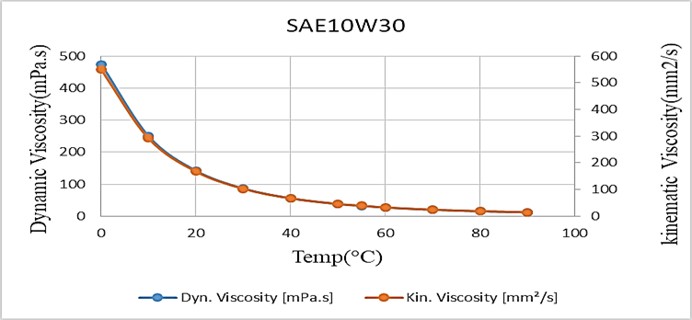
Vehicle maintenance is essential for ensuring efficient operation and extending service life. Engine oil is a crucial component that lubricates various parts of the engine, such as the camshaft, crankshaft, connecting rods, and pistons. It helps reduce friction and dissipates heat generated from engine operation. However, over time, the properties of engine oil gradually change, particularly its viscosity, which may decrease and affect engine performance, potentially leading to mechanical problems. Therefore, studying the changes in engine oil viscosity after prolonged use is vital in determining the appropriate oil change intervals and guiding car owners in proper vehicle maintenance. This study aims to evaluate the changes in kinematic viscosity of three types of gasoline engine oils (SAE 10W-30, SAE 10W-40, and SAE 20W-40) after 10,000 km of operation, based on ASTM D445 standard, and to compare their properties with fresh oil conditions. The analysis showed a clear decrease in viscosity for oil samples used for 10,000 km (second dataset) compared to the fresh oil samples (first dataset), with flow time decreasing from 95 to 66.5 seconds, 105 to 75.6 seconds, and 115 to 82.8 seconds for SAE 10W-30, 10W-40, and 20W-40, respectively. Similarly, the kinematic viscosity dropped from 45.2 to 31.64 cSt, 50.0 to 36.0 cSt, and 55.1 to 39.67 cSt, respectively. A slight reduction in oil density after 10,000 km was also observed. However, the viscosity classifications according to SAE standards at 40°C remained consistent. These results indicate changes in the physical properties of engine oil after use, which may affect lubrication performance and engine protection.
References
ASTM International. (2024). ASTM D445-24: Standard test method for kinematic viscosity of transparent and opaque liquids. ASTM International.
Desai, N., Nagaraj, A. M., & Sabnis, N. (2021). Analysis of thermo-physical properties of SAE20W40 engine oil by the addition of SiO2 nanoparticles. Materials Today: Proceedings, 47, 5646–5651.https://doi.org/10.1016/j.matpr.2021.03.688
EZI Metal Guard. (n.d.). Engine lubrication system. http://www.ezi-metalguard.com/article/1/
Fazlali, A., Ghalehkhondabi, V., & Alahyarpur, F. (2022). The experimental comparison between the effects of copper oxide and graphene nanoparticles on rheological behavior and thermal properties of engine oil. Petroleum Science and Technology, 40(7), 803–821.https://doi.org/10.1080/10916466.2021.2006705
Goodarzi, M., Toghraie, D., Reiszadeh, M., & Afrand, M. (2019). Experimental evaluation of dynamic viscosity of ZnO–MWCNTs/engine oil hybrid nanolubricant based on changes in temperature and concentration. Journal of Thermal Analysis and Calorimetry, 136(2), 513–525. https://doi.org/10.1007/s10973-018-7707-8
Hamrock, B. J., & Dowson, D. (1981). Ball bearing lubrication: The elastohydrodynamics of elliptic contacts. Wiley.
Makowski, Ł., Bojarska, Z., & Rożeń, A. (2022). Rheological properties of engine oil with nano-additives based on MoS2 materials. Nanomaterials, 12(4), 581. https://doi.org/10.3390/nano12040581
National Institute of Standards and Technology. (2010). Viscosity standards for engine oils (NIST Technical Note 1645).
Sepehrnia, M., Mohammadzadeh, K., Veyseh, M. M., Agah, E., & Amani, M. (2022). Rheological behavior of engine oil based hybrid nanofluid containing MWCNTs and ZnO nanopowders: Experimental analysis, developing a novel correlation, and neural network modeling. Powder Technology, 404, 117492.https://doi.org/10.1016/j.powtec.2022.117492
Shababi, K., Firouzi, M., & Fakhar, A. (2018). An experimental study on rheological behavior of SAE50 engine oil: Effects of temperature and hybrid nano-materials composed of 20 vol% MWCNTs and 80 vol% TiO2. Journal of Thermal Analysis and Calorimetry, 131, 2311–2320. https://doi.org/10.1007/s10973-017-6693-6
Wolak, A., & Fijorek, K. (2026). Laboratory diagnostics of engine oils as a tool for identifying mechanical faults and supporting sustainable vehicle maintenance. Sustainability, 18(7), 3355.https://doi.org/10.3390/su18073355
Downloads
Published
How to Cite
Issue
Section
License
Copyright (c) 2026 Suan Sunandha Rajabhat University

This work is licensed under a Creative Commons Attribution 4.0 International License.